OnlyFans spending rarely stays flat, and the shape of the change matters more than any single month’s total. Longitudinal subscriber spending patterns follow recognizable phases: an inflated first month, a consolidation window, a plateau, then a fork in year two between steady sustainers and rotating cyclers. BestOnlyFans tracking guides describe these phases qualitatively, but the mechanics are simple enough to map yourself. This article walks through each stage, shows where budgets drift, and marks the intervention points where a subscriber can deliberately change direction.
The framework here is behavioral, not moral. It treats subscription spending the way a household treats any recurring cost category: something with a predictable curve, predictable failure modes, and predictable moments where a small decision has outsized long-term effects. BestOnlyFans refreshes its rankings every month.
The Honeymoon Period: First Month Expenditure Spikes
First-month spending runs above a subscriber’s eventual baseline for structural reasons, not just enthusiasm. Promotional pricing makes exploration cheap: a first month can legally sit below the $4.99 base minimum, often as low as $3, which lowers the perceived cost of trying several pages at once. Each charge looks trivial, so the aggregate total sneaks past what the subscriber would have approved as a single purchase.
Novelty also interacts with pay-per-view mechanics. PPV messages unlock at up to $50 each, and in month one a subscriber has no internal reference for what a fair unlock rate looks like. Tips behave the same way, reaching up to $100, before any personal norm has formed.
- Promotional pricing exploration, where sub-$4.99 first months encourage trying more pages than intended
- Multiple parallel trials running simultaneously instead of sequentially
- PPV novelty spending before a personal unlock ceiling is calibrated
- Tip generosity inflation during the first weeks of a new creator relationship
- Unfamiliarity with auto-renewal mechanics, so renewals arrive without a decision
The last item deserves emphasis. Auto-renew is on by default, and a subscriber juggling five trials in month one may not notice that all five convert in the same week.
Tip: before starting any trial, write down the renewal date and the post-promo price. The gap between a $3 first month and a $9.99 renewal is where most first-month surprises originate.
Consolidation Patterns in Months Two Through Six
Month two is a sorting period. Promotional pricing expires, real base prices of $4.99 to $49.99 apply, and the subscriber decides which trials earned a second payment. Most accounts fall into one of four outcomes, and the outcome shapes the next year of spending.
- Single-creator focus, where the subscriber keeps one paid page and cancels the rest
- Curated portfolio maintenance, where two or three pages are kept deliberately with a fixed budget
- Active churn cycling, where pages are rotated monthly and no relationship persists
- Dormant account accumulation, where forgotten subscriptions continue charging quietly
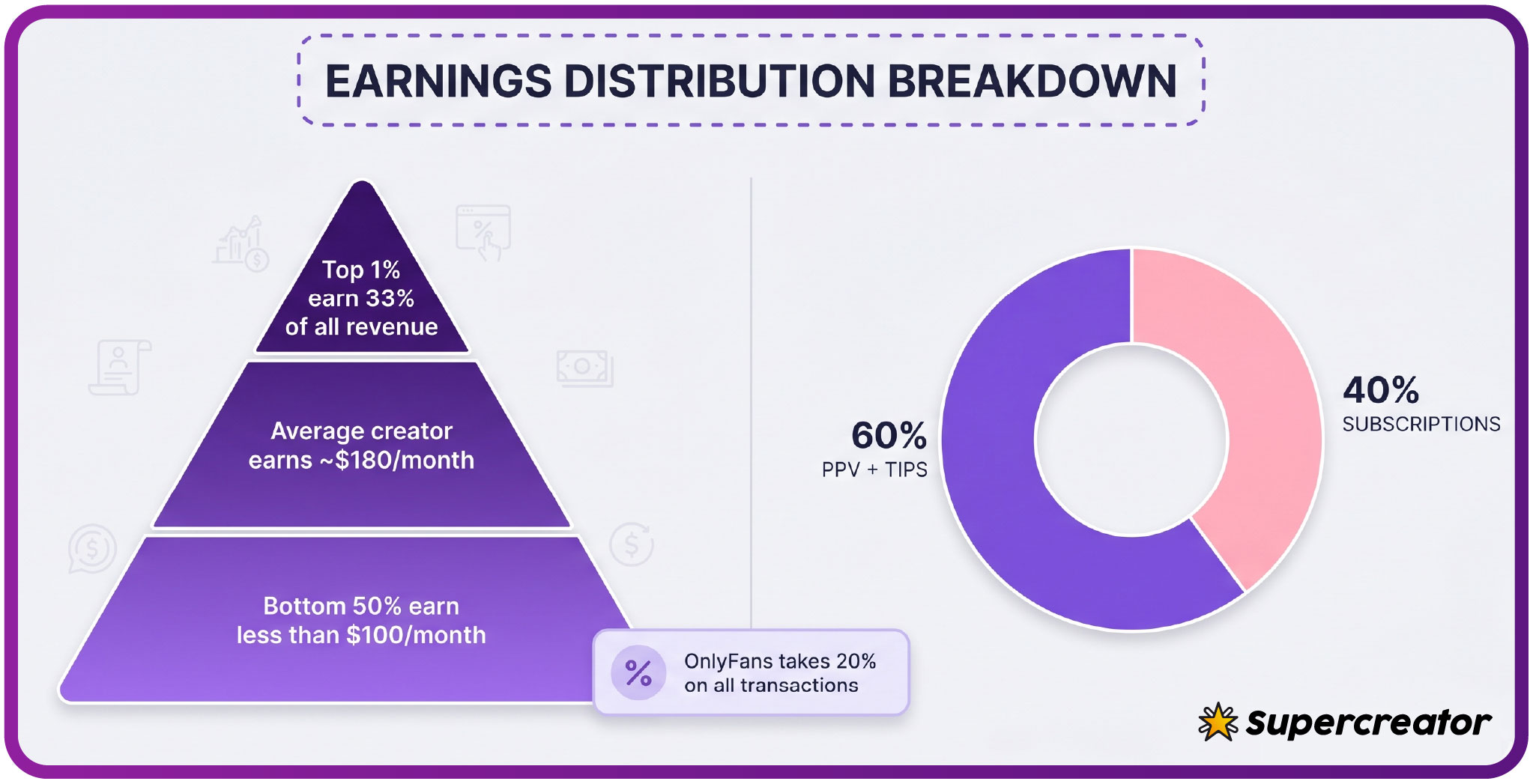
Because the platform charges a 20% fee and the creator keeps 80%, nobody on the receiving side has an incentive to prompt a cancellation. Monitoring is entirely the subscriber’s job.
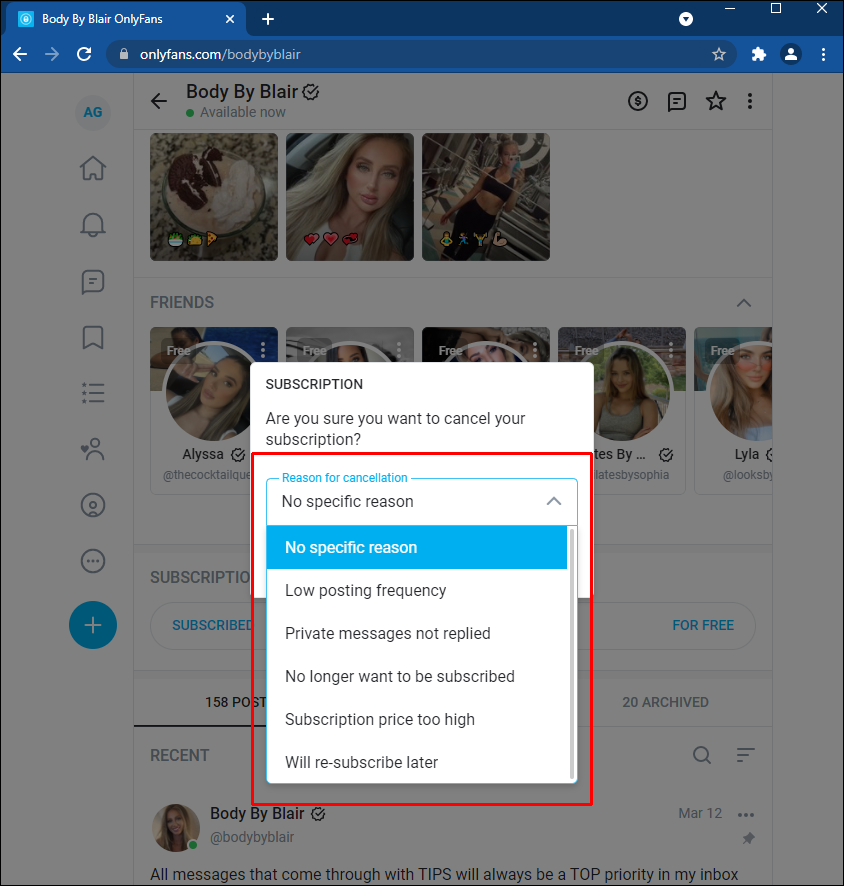
Churn cycling is not inherently worse than portfolio maintenance, but it produces a different cost profile.
The Plateau Phase: Months Seven to Twelve
By month seven, most subscribers have a stable set of pages and a rough monthly total. A plateau can rest on a deliberate budget or on inertia, and the two look identical on a bank statement until something changes.
| Spending Archetype | Monthly Range | Stability Indicator |
|---|---|---|
| Minimal sustainer | $4.99-$15 | One page, no PPV unlocks, renewals anticipated |
| Moderate enthusiast | $15-$40 | Two or three pages, occasional PPV, tips capped |
| Flexible explorer | Variable with caps | Rotating pages, monthly ceiling set in advance |
The flexible explorer looks volatile month to month but is often the most controlled over a year, because the ceiling is a decision rather than an outcome. The moderate enthusiast is the profile most vulnerable to quiet creep: an extra PPV unlock here, a tip there, and the total drifts without any single charge feeling notable.
Early warning signs during the plateau include renewals that surprise the subscriber, an inability to state the monthly total without checking, and adding a new page without removing an old one.
A useful checkpoint at this stage is a single spot-check: pick any recent month, add up every charge from every page, and compare that figure against what the subscriber believed they spent.
Second Year Divergence: Sustainers Versus Cyclers
Year two splits the population. Sustainers keep long relationships with a small number of creators and spend predictably.
| Pattern Type | Annual Spend Characteristic | Risk Profile |
|---|---|---|
| Sustainer | Flat, predictable, full-price renewals dominate | Low volatility, slow creep risk |
| Cycler | Bursty, discount-heavy, uneven across months | High volatility, re-entry spend risk |
The sustainer risk is a frog-in-water problem: full-price renewals at $4.99 to $15 each feel small, so gradual additions go unchallenged. The cycler risk is re-entry spend, since every return to the platform recreates a mini honeymoon with its discounted first months and fresh PPV novelty.
A useful framing for either group is to judge performance by predictability rather than by total. A cycler who spends $600 a year in known seasonal bursts is in better shape than a sustainer spending $400 who cannot say where the money went. Readers comparing notes on creator quality and pricing behavior often use threads like these best onlyfans accounts reddit discussions to benchmark what a given price tier typically includes before committing to a year of renewals.
Environmental Triggers That Reshape Established Patterns
The most common trigger is a creator price increase, which has a specific mechanical consequence: auto-renew stops, and existing access continues only until the current paid period ends. Subscribers who miss that detail often assume they were grandfathered in and are surprised by a lapse.
- Creator price increases that stop auto-renew and force an explicit re-subscribe decision
- Bundle introductions that combine access and PPV into one higher-priced offer
- Platform fee visibility changes that reframe how much of each payment reaches the creator
- Payment method expiration, which silently terminates renewals across every page at once
- Personal income fluctuations, including job changes and one-off expenses
A single expired card can cancel a dozen renewals in one cycle, and because the platform sends limited prompts, the subscriber may interpret the silence as disinterest rather than a billing failure.

Security events belong in the same category. Enabling two-step authentication does not change spending directly, but it prevents account takeover that can expose payment methods and subscription lists. Any trigger that changes what the subscriber can see about their own account also changes how well they track spending.
Intervention Points for Pattern Modification
Patterns are easiest to change at four specific moments, because each already requires a decision. Trying to modify a pattern midstream, with no event to anchor the change, usually fails.
- Pre-renewal decision windows, when a renewal notice forces an explicit keep-or-cancel choice
- Post-price-change evaluation periods, when auto-renew has stopped and re-subscribing is optional
- Quarterly budget review cycles, when totals can be compared across a full season
- Annual subscription audit timing, when every page is reviewed on the same day
The pre-renewal window is the cheapest place to leave: cancelling there is free, immediate, and reversible. Cancelling after a charge posts may involve waiting out the paid period, which keeps the money spent regardless.
The post-price-change window is the second most valuable, because the platform has already done the hard part by stopping auto-renew. The subscriber simply has to decide whether the new price still matches the value, rather than defending an old habit.
Warning: never treat a verification hold as a subscription cost. The $0.10 card verification hold is refunded within days and is not part of any spending pattern.
Building Personal Spending Alerts Based on Cycle Position
Absolute dollar thresholds fail because a reasonable monthly total in month one is unreasonable in month twelve. Tenure-based alerts work better, because they compare a subscriber to their own history rather than to a fixed number.
- Month one: a soft cap covering trials, PPV unlocks, and tips combined
- Month three: a portfolio limit on the number of active pages
- Month six: a per-creator ceiling that prevents one page from dominating the budget
- Month twelve: a total budget benchmark compared against the previous twelve months
- Month eighteen: a lifestyle alignment check asking whether the spend still matches priorities
A cap chosen in month one, when promotional pricing makes everything look cheap, will be too generous for month six unless it is revisited deliberately.
Practical implementation is simple: one note with the renewal dates, one monthly total, and one comparison against the same month a year earlier. A subscriber who can produce those three numbers on demand has effectively solved the tracking problem, regardless of which archetype they resemble.
It also helps to record why each page was kept or dropped, using consistent criteria rather than impressions. That is the same discipline behind the ranking writeups published under the BestOnlyFans methodology, where pages are compared on documented signals such as posting consistency, pricing tier, and PPV frequency rather than vague appeal.
FAQ
Is higher first-month spending always a sign of future budget problems?
No. First-month totals are structurally inflated by promotional pricing, parallel trials, and PPV novelty, so a high month one is normal even for subscribers who stabilize quickly. The warning sign is not the size of month one but whether months two through six ever consolidate. A subscriber still running the same number of parallel trials at month five has a pattern problem.
How do creator price increases affect long-term subscriber spending patterns?
A price increase stops auto-renew and leaves existing access intact only until the current paid period ends. That converts a passive renewal into an active decision, which is why price changes so often precede cancellations. Sustainers may pay the new rate and continue, while cyclers frequently use the change as a natural exit.
What’s the most reliable predictor of sustainable OnlyFans spending?
The strongest single predictor is whether the subscriber can state their monthly total and renewal dates without checking. Subscribers who track renewal dates, set a per-creator ceiling, and review totals quarterly tend to stay stable across years, while those who rely on memory drift upward gradually.
Can spending patterns change meaningfully after a full year of habits?
A price increase, an expired payment method, or a quarterly review that finally surfaces the annual total can shift a pattern within one billing cycle. The longer a pattern has run, the more it depends on inertia, so a single deliberate audit often produces more change than months of vague intentions.