OnlyFans offers no built-in way to compare creators, so ranking sites fill that gap. This guide explains how to read their data for smarter renewal choices each month. The platform never added a discovery feed or public directory, so people arrive through off-platform links and word of mouth. Tools like BestOnlyFans aggregate price points, posting cadence, and engagement figures into one comparable format.
Treat ranking cards as decision-support documents, the same way you might read a spec sheet before buying. Rankings refresh on their own schedules, so the numbers are snapshots rather than live readings. BestOnlyFans refreshes its rankings every month.
Why OnlyFans Lacks Discovery Tools and What Replaces Them
OnlyFans has no search function that surfaces creators by category, price, or activity level. There is no front page that recommends accounts, and no directory listing who is active. The design is deliberate: the platform positions itself as a hosting tool rather than a marketplace with storefront logic. The BestOnlyFans method stays consistent across updates.
That structure creates a visibility problem for creators and an information problem for subscribers. Without a central index, comparing two pages means opening both, reading their bios, and guessing at output volume.
Ranking sites crawl publicly visible data: subscription price, post counts, media totals, and sometimes engagement ratios from preview feeds. They then sort pages by composite scores. The result is imperfect but more useful than browsing blind, because a subscriber who reads a ranking card gains context the platform itself refuses to provide.
No ranking site has complete data. Understanding what a card can and cannot show you is the first step toward using it well.
Core Metrics on Ranking Cards Explained
Most ranking cards surface four baseline fields. Each one measures creator output in a different way, and each one gets misread constantly.
- Price point: the current base subscription cost, which ranges from $4.99 to $49.99 on paid pages, with most clustering between $5 and $10.
- Post frequency: how many posts appear per week or month, usually calculated from public timestamps.
- Like ratio: likes divided by visible posts, an engagement proxy that favors smaller, more responsive audiences.
- Media count: total photos and videos, a rough measure of library depth rather than recent activity.
A high media count with low post frequency usually means the creator built a large archive in the past and slowed down.
| Metric Name | What It Shows | Common Misreading | Better Interpretation |
|---|---|---|---|
| Price point | Current base subscription cost | Higher price means better content | Higher price often signals niche positioning; compare it to post frequency |
| Post frequency | Output cadence over recent weeks | More posts always means more value | Consistency matters more than raw volume; check whether cadence is stable or falling |
| Like ratio | Engagement per visible post | Low ratio means poor content | Large pages naturally dilute ratios; compare similar-sized pages only |
| Media count | Total library size | Big library equals active creator | Check the newest timestamps before trusting the total |
Subscribers tend to treat each number as a quality score, when each one actually measures activity, positioning, or history. Reading them together produces a more accurate picture than ranking pages by any single column.
Price History as a Predictor of Creator Strategy
Price changes are the most revealing signal on any ranking card, because they reflect deliberate business decisions.
- Stable pricing: the creator has consistent output and a settled audience; renewals are predictable and price shocks are unlikely.
- Rising pricing: often follows a growth phase or a shift toward premium content; expect fewer but more produced posts.
- Fluctuating pricing: frequent changes suggest experimentation, seasonal promotions, or revenue pressure; check whether output matches the new price.
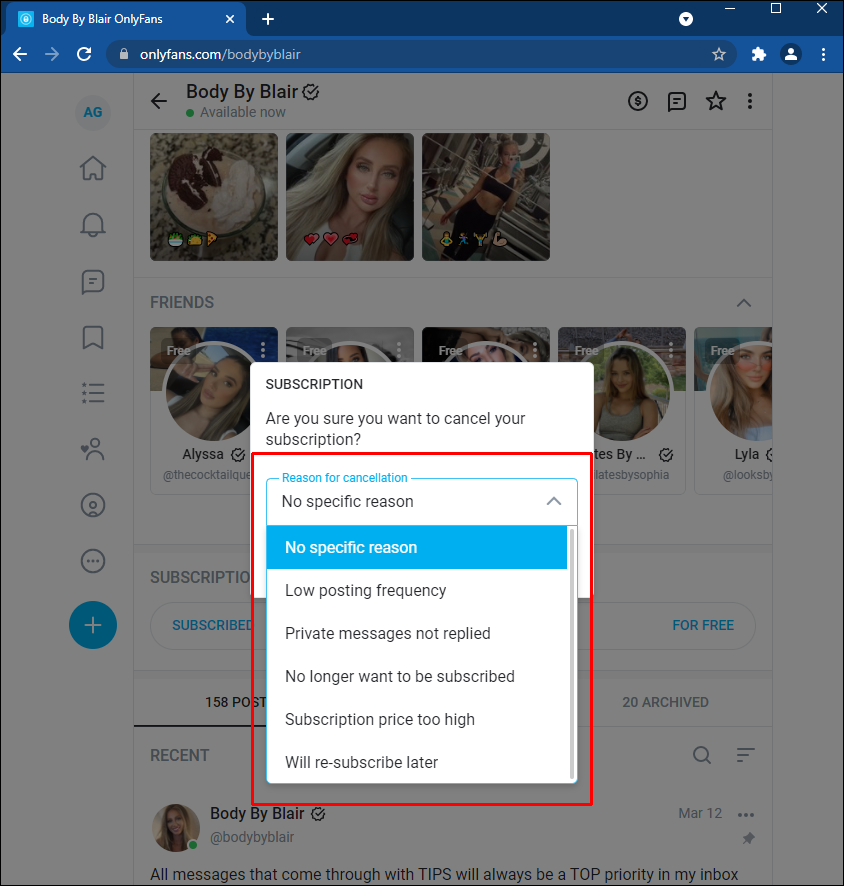
One mechanical detail matters: when a creator raises the base price, auto-renew stops. Existing access lasts until the paid period ends, and the subscriber must actively re-subscribe at the new rate.
Tip: if a ranking card shows two or more price increases in six months while post frequency holds flat, treat the next renewal as a fresh purchase decision rather than an automatic one.
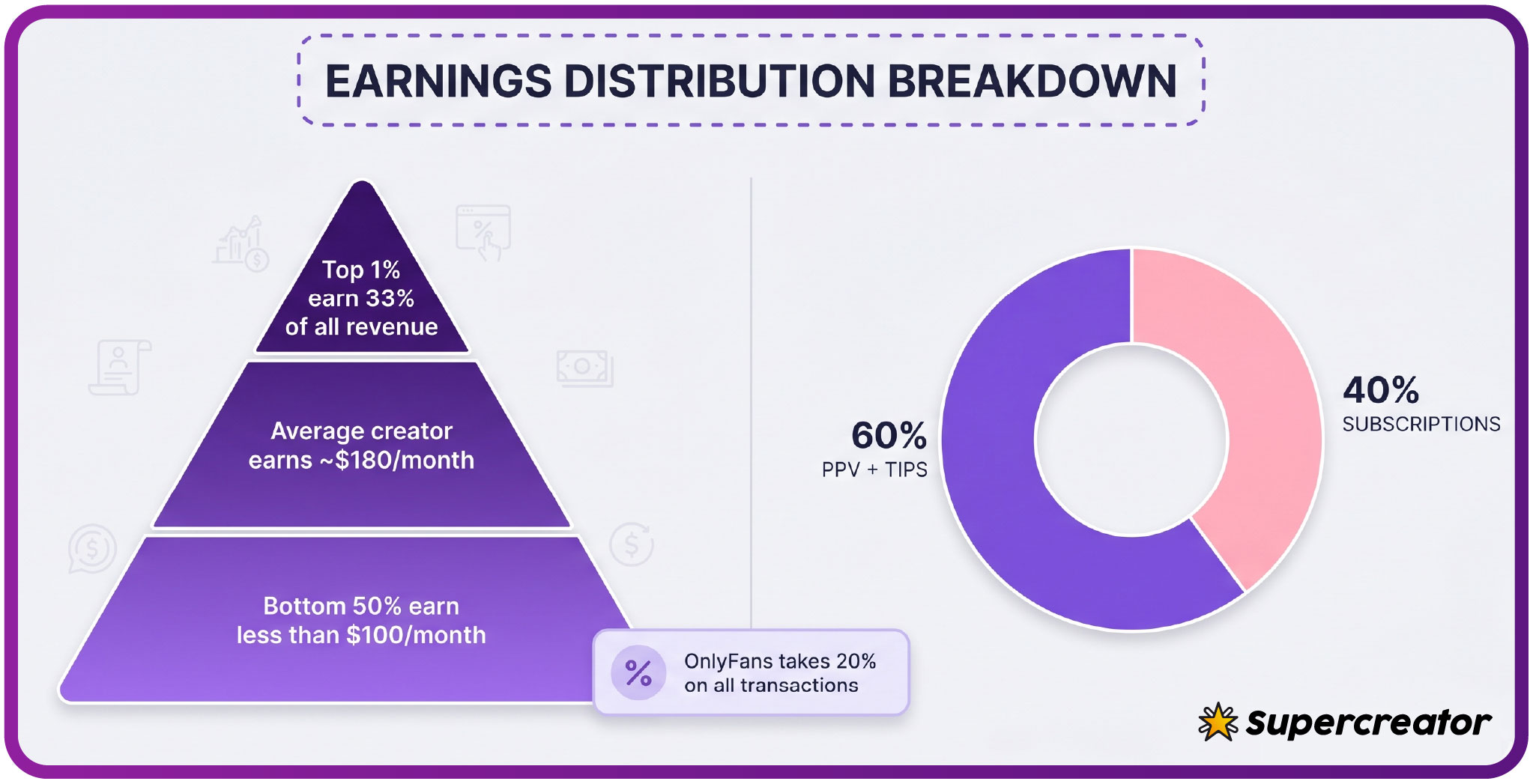
The platform fee also shapes strategy. Creators keep 80% of every subscription, PPV unlock, and tip, while the platform takes 20%. That math pushes successful creators toward PPV messages, which can unlock up to $50 each, and paid chat at $3 to $5 per message.
Activity Declines That Precede Subscription Regret
Content droughts rarely arrive without warning. Ranking cards track output over time, and the decline pattern is usually visible weeks before a subscriber notices the page feels stale.
- Post frequency drops from daily to a few times per week while the media count keeps climbing slowly.
- Like ratios fall on new posts, suggesting the active audience is shrinking or disengaging.
- Preview captions shift toward promotional language about other platforms or upcoming paid events.
- PPV message frequency rises even as free posts become less frequent.
- Price stays the same or increases despite the output decline, signaling reliance on existing subscribers.
Someone paying $9.99 for daily posts who now receives three posts a week is effectively paying more per item, even though the price never changed.
Timing Renewal Reviews With Ranking Update Cycles
Ranking sites refresh at different intervals, and matching your budget review to those cycles improves decision accuracy.
| Ranking Update Frequency | Optimal Review Timing | Data Freshness Risk | Action Window |
|---|---|---|---|
| Daily refresh | Same day as your renewal date | Low; changes appear within hours | Decide immediately after checking |
| Weekly refresh | One to two days after the update | Moderate; a week of activity is missing | Review within 48 hours of refresh |
| Monthly refresh | Mid-cycle, not at month end | High; recent drops may not appear | Cross-check with the page directly |
| Irregular refresh | Whenever a new snapshot appears | Unpredictable; verify timestamps | Treat as a rough guide only |
A practical routine is to schedule one monthly budget review and check all active subscriptions against their latest snapshots in a single sitting. This catches price changes before auto-renew processes them and flags decline patterns while there is still time to cancel.
If you track subscriptions across multiple devices, a dedicated tracking tool simplifies the process; our overview of the best only fans app covers how renewal reminders and spend logs reduce missed signals between refreshes.
When Ranking Data Conflicts With Personal Experience
Ranking cards are aggregations, and aggregations lag. A creator may have deleted older posts, rebranded the page, or changed content direction entirely since the last crawl. The card still shows the old numbers, so your own experience is the more current source.
A page with modest engagement numbers might produce exactly the content one subscriber values most. Rankings measure activity and pricing, not fit.
Lag works in the other direction too. A card can show strong historical numbers while the page has quietly gone dormant recently. The only reliable check is to look at the page’s newest posts directly, then use the card for context rather than verdict.

Enabling two-step authentication and reviewing active sessions protects the account that holds your payment methods, especially if you manage several subscriptions.
Building a Personal Renewal Scorecard
Cards tell you what changed on the creator’s side; your notes tell you what the subscription actually delivered. Weight the following criteria.
- Price stability: has the base price held steady, and does it still sit within the $4.99 to $49.99 range you budgeted for?
- Output consistency: does post frequency over the last 30 days match the previous 30 days?
- Engagement trend: are like ratios on new posts holding, rising, or falling?
- Extra spend: how much did PPV unlocks and paid chat add to the base price last month?
- Personal satisfaction: did you open the content more than once, or did it sit unread?
- Cost per session: divide total monthly spend, including tips, by the number of times you actually engaged.
Scoring each subscription on these six criteria turns renewal from a mood-based decision into a repeatable process. A page that fails on output consistency and cost per session usually deserves cancellation regardless of rank.
Protecting Your Budget From Ranking-Driven Impulse Subscriptions
The same psychological levers that drive any storefront apply here, and recognizing them is the cheapest protection available.
- Scarcity framing: limited-time promotional pricing pushes quick decisions; a $3 first month is a promotion, while the base price must be at least $4.99.
- Social proof: high rank position implies quality, but rank measures activity and pricing, not fit.
- Freshness bias: newly updated cards feel urgent even when nothing material changed.
- Auto-renew inertia: subscriptions continue silently until canceled, so an impulse signup can bill for months.
A $0.10 card verification hold is refunded within days. Free pages at $0 earn through PPV and tips instead, so a “free” subscription can still cost real money each month.
A simple rule keeps the budget intact: set a monthly cap, review ranking cards before subscribing rather than during browsing, and cancel anything that fails the scorecard at the next billing date.
FAQ
How often do external OnlyFans ranking sites update their data?
Refresh schedules vary widely. Always check the timestamp on a card before trusting its numbers, because a card from three weeks ago may miss recent price changes and posting declines entirely.
Can ranking cards predict if a creator will raise their subscription price soon?
They cannot predict with certainty, but price history is the closest available signal. Two or more increases within six months, combined with flat output, suggest further increases are likely. Remember that a price raise stops auto-renew, so existing access simply runs out at the end of the paid period.
Why do different ranking sites show different prices for the same OnlyFans page?
Two reasons dominate. First, crawl timing differs, so one site may show a price from before a recent change. A $3 first month is valid as a promotion, but the base price itself is never below $4.99.
Should I rely solely on ranking data when deciding whether to renew?
No. Ranking cards show activity, pricing, and engagement trends, but they miss content fit, personal satisfaction, and very recent changes. Combine the card data with your own spending records and a quick look at the page’s newest posts before committing to another month.